

YAG capsulotomy is a medical procedure that uses a YAG laser to treat Posterior Capsule Opacification (PCO), a common condition after cataract surgery. During cataract surgery, the cloudy lens in the eye is removed and replaced with an artificial intraocular lens. Over time, the eye’s natural cells may build up on the posterior capsule, causing blurred vision similar to looking through dirty glass.
YAG capsulotomy is a treatment for patients who have experienced decreased vision after cataract surgery due to clouding. It is a non-invasive and painless procedure that is performed in an outpatient setting and does not require hospitalization. YAG capsulotomy is generally appropriate for people who experience vision loss due to PCO and have difficulty with daily activities such as reading or driving.
YAG Capsulotomy Procedure – How Does It Work?
The procedure is performed using a YAG laser, which is focused on the posterior capsule of the eye to create a small opening, which releases the blocked light path. The opening is made in the center of the capsule. Before the procedure begins, the patient is given eye drops to dilate the pupil and sometimes anesthetic drops to prevent discomfort.
The doctor uses a precision laser device to make a controlled cut in the posterior capsule. The procedure itself takes only a few minutes, after which the patient is discharged home without the need for hospitalization. Most patients experience improvement in vision within hours to a few days.
When is capsulotomy necessary after cataract surgery?
YAG capsulotomy is required when clouding of the posterior capsule of the eye occurs after cataract surgery, a condition known as Posterior Capsule Opacification (PCO). This condition is also known as “secondary cataract.” This phenomenon can develop months to years after surgery and is one of the most common reasons for a renewed decrease in visual acuity in patients who have undergone intraocular lens implantation.
The need for the procedure arises when the cloudiness affects the patient’s quality of vision to the point of impairing daily functioning. In many cases, people report decreased visual acuity, difficulty reading, severe glare especially in low light conditions or in front of strong light sources, and a feeling of fog in the eye. If these symptoms affect the quality of life and do not improve with glasses or other measures, a YAG capsulotomy may be the appropriate solution.
Before treatment, the ophthalmologist examines the condition of the posterior capsule, the cornea and the retina, as well as the intraocular pressure and the medical treatment history, to rule out other causes of the blurring. People with active eye inflammation, retinal tears, or other serious eye conditions may not be suitable candidates for treatment.
Symptoms indicating the need for treatment
As posterior capsule opacification worsens, the patient may feel as if their vision has returned to a state reminiscent of that before cataract surgery. One of the most prominent symptoms is the gradual onset of blurred vision, which does not improve with glasses. Many patients describe a feeling of a screen or fog in the eye, making it difficult to focus on small details.
Another symptom that may indicate the need for treatment is increased sensitivity to light, which includes severe glare, especially in bright light, such as when driving at night or in direct sunlight. In addition, there may be difficulty distinguishing colors, a general feeling of darkness in the field of vision, or even the appearance of shadows around light sources. If these symptoms become a significant nuisance and impair quality of life, it is important to consult an ophthalmologist for an examination and to assess the need for a YAG capsulotomy.
How is the process carried out?
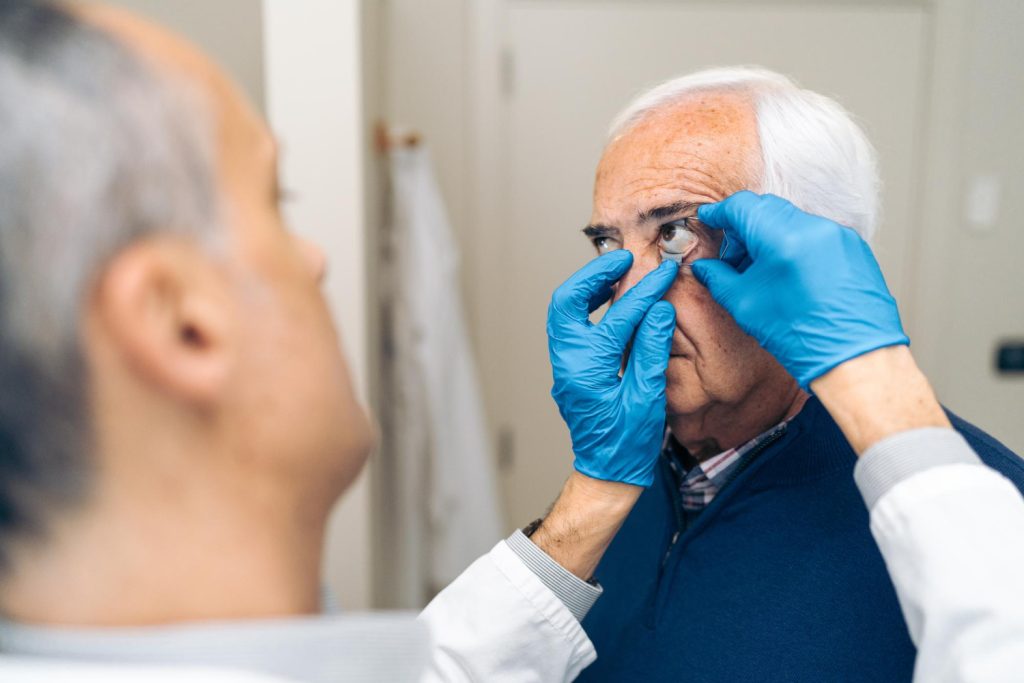
A YAG capsulotomy procedure is a non-invasive procedure performed using a YAG laser to remove cloudiness from the posterior capsule of the eye after cataract surgery. Most patients do not need any special preparation. However, additional time should be allocated before the treatment for examination and preparation, as well as time for a short rest afterwards. Before the procedure begins, the patient is given eye drops to dilate the pupil and sometimes local anesthetic drops to reduce discomfort.
The treatment itself is performed in an eye clinic without the need for an operating room. The patient sits in front of a device resembling an examination lamp or microscope, on which the laser is mounted. The doctor uses a precise laser device that targets the capsular opacity and creates a tiny opening in it that allows light to pass unhindered to the retina. The procedure takes only a few minutes, and during it the patient does not feel any pain, except for fleeting flashes of light.
After the procedure, the patient is discharged home without the need for hospitalization. Sometimes temporary use of eye drops will be recommended to lower intraocular pressure or prevent inflammation. In most cases, improvement in vision is noticeable within a few hours to a few days.
Advantages and disadvantages
One of the main advantages is that the procedure takes just a few minutes and is performed in the clinic without the need for anesthesia. In addition, it is a non-invasive treatment that does not require incisions in the eye, so the risk of infection is very low. The treatment also does not involve replacing the implanted lens.
The result is maintained over time, and the chance of the cloudiness returning is very low.
However, there are also disadvantages to consider. In rare cases, the procedure may cause a temporary increase in intraocular pressure, so medical monitoring is necessary, especially in patients with a history of glaucoma. Another rare risk is damage to the intraocular lens. Floaters in the field of vision are common and usually pass.
In conclusion, YAG capsulotomy is a safe and effective procedure.
Possible side effects
YAG capsulotomy is considered a safe and effective procedure, but as with any medical treatment, side effects may occur in some patients. One of the most common symptoms is the appearance of flashes of light or “floaters” in the field of vision. These are natural changes in the vitreous of the eye that may occur after treatment but usually resolve on their own within a few days to weeks. Mild irritation, discomfort, or a gritty feeling in the eye may also occur, and soothing or lubricating eye drops can relieve these symptoms.
Another phenomenon that may occur is a temporary increase in intraocular pressure, especially in patients who suffer from glaucoma or are prone to high intraocular pressure. For this reason, in some cases the doctor will recommend the temporary use of eye drops to lower the pressure or closer monitoring after the procedure.
In very rare cases, complications such as mild intraocular inflammation, retinal edema, or changes in the position of the intraocular lens may occur. Most mild side effects resolve on their own without the need for special treatment, but in exceptional cases, medical examination should be sought to prevent further complications.
More detail is available on the page YAG laser side effects – what is important to know.
Is YAG capsulotomy dangerous?
In general, YAG capsulotomy is considered a safe procedure.
However, there is a risk of side effects that require medical monitoring. In rare cases, retinal damage such as retinal detachment or macular edema may occur, especially in patients with existing risk factors. There may also be a temporary increase in intraocular pressure, which requires examination by an ophthalmologist after the procedure, especially if there is a history of glaucoma. In rare cases, this increase in pressure can lead to optic nerve damage if not treated in time.
Despite the potential risks, YAG capsulotomy is a standard treatment for capsular opacities, and is performed by experienced ophthalmologists worldwide.

Recovery after YAG capsulotomy – what to expect?
Since it is a non-invasive procedure that does not involve incisions or stitches, most patients can return to their daily routine on the same day of treatment or the next day.
After the procedure, there may be temporary blurred vision, resulting from the laser flashes or from the dispersion of the capsule particles that have broken down inside the eye. This sensation usually passes within a few hours to a few days. Temporary glare or sensitivity to light may also occur. Some patients may feel the presence of “floaters” in the field of vision, a phenomenon resulting from changes in the vitreous of the eye and sometimes lasting several weeks.
In some cases, your doctor may recommend the use of anti-inflammatory eye drops or eye drops to reduce intraocular pressure, especially if you have a history of glaucoma. All patients, not only those with a history of glaucoma, should attend a check-up after treatment and continue periodic follow-up with the ophthalmologist. It is important to seek medical attention if you experience unusual symptoms such as severe pain, a sharp decrease in vision, or the appearance of shadows in your field of vision.
YAG capsulotomy results – how long does it take to see improvement?
Most patients experience improvement in vision within hours to days after a YAG capsulotomy. Because the procedure opens a more direct path for light to pass to the retina, many report improvement in clarity and contrast.
In some patients, improvement is gradual and lasts for several days to weeks, especially if there were minor side effects such as temporary blurring or floaters. In rare cases, if there is another medical problem with the eye, such as macular edema or severe dryness, it may take longer for full improvement.
The main advantage of YAG capsulotomy is that the result is usually permanent and does not require repeat treatment. The risk of clouding returning is very low, and most patients enjoy long-term vision improvement without the need for further intervention. In the rare cases where the cloudiness returns, the treatment can be repeated.
Are there any restrictions after YAG capsulotomy?
After a YAG capsulotomy, most patients can return to their daily routine without any special restrictions. Since it is a non-invasive procedure that does not require incisions or stitches, patients are not required to avoid exercise, reading, or using screens.
However, there may be temporary blurred vision immediately after the procedure, so it is recommended to avoid driving until your vision stabilizes. Additionally, if your vision is still not clear or if you experience significant flashes of light, it is best to wait until your vision has completely cleared before returning to activities that require visual accuracy, such as working at a computer or driving at night. It is also recommended to avoid rubbing the eye for a few days. Patients with sensitivity to light should prefer gently lit areas in the first days.
In some cases, doctors recommend avoiding strenuous activity such as heavy lifting or swimming for the first few days after the procedure, mainly to prevent a temporary increase in intraocular pressure. Patients with a history of glaucoma or other eye problems may need to be re-evaluated to ensure that intraocular pressure remains normal.

YAG capsulotomy versus other treatments for capsular opacity
YAG capsulotomy is currently the standard treatment for posterior capsular opacification (PCO) following cataract surgery, but there have been other approaches to treating this condition in the past. Before the development of laser technology, capsular opacification was treated with a repeat surgery, which required a delicate cut into the posterior capsule of the eye. This method is rarely performed today.
Another option is to wait and make optical adjustments, such as changing the glasses prescription, in cases where the cloudiness is mild and does not significantly affect quality of life. However, in most cases, when there is vision impairment, YAG capsulotomy is the standard treatment, without the need for invasive surgery.
The procedure is a standard treatment for capsular opacities and is routinely performed in eye clinics worldwide.
YAG laser versus other lasers
Another laser in the field of ophthalmology is the excimer laser, which is especially common in refractive surgeries such as LASIK or PRK. It is designed to reshape the cornea to improve vision, and its purposes are entirely different from those of the YAG laser.
How much does it cost?
The price of a YAG capsulotomy varies depending on a number of factors, including the medical institution where the procedure is performed, the experience of the performing physician, and the patient’s eligibility through the health fund.
In Israel, YAG capsulotomy is included in the health basket, so members of all the health funds are usually entitled to it through their fund, regardless of where the original cataract surgery was performed. Co-payments or conditions may differ between the funds, so it is advisable to check with your fund. However, when the procedure is performed privately, the price is usually 2,500 to 3,500 NIS per eye, depending on factors such as the type of clinic, the medical equipment, and the quality of the service provided. The price also depends on the complexity of the treatment. A higher price does not necessarily indicate higher quality.
Prices are a general estimate only; an exact quote is given after an examination. Get a personal price quote
If you have private insurance, check the terms of the policy with the insurance company.
Where can a YAG capsulotomy be performed in Israel?
YAG capsulotomy is performed in a variety of medical settings in Israel, including public hospitals, private medical centers, and specialized eye clinics. All four health insurance companies in Israel – Clalit, Maccabi, Meuhedet, and Leumit – offer the procedure as part of basic medical insurance, according to eligibility and medical criteria determined by the treating physician.
In addition, there are private clinics specializing in ophthalmology where the procedure can be performed with shorter waiting times. These clinics operate mainly in large cities such as Tel Aviv, Jerusalem, Haifa and Beersheba, but similar services can also be found in smaller medical centers throughout the country.
Before making an appointment, it is recommended to make sure that the performing doctor is experienced in this procedure and that the clinic uses advanced laser equipment.
Have a question about cataract surgery? We are happy to help.