

Lens implants are a key part of cataract surgery, designed to improve vision affected by clouding of the lens of the eye. Cataracts, one of the most common causes of vision loss worldwide, develop gradually when the natural lens becomes cloudy, affecting quality of life and the ability to perform simple daily activities, such as driving, reading, or watching television.
During lens implantation surgery, the damaged natural lens is removed and replaced with an artificial lens chosen by measurements of the eye. These lenses are designed to improve not only vision but also the quality of life of patients. The adjustment is made according to the state of eye health, personal needs, and lifestyle habits. For example, for patients who wish to reduce the need for glasses or contact lenses, advanced lenses such as multifocal or toric lenses can be chosen.
Additionally, lens implants are suitable not only for those suffering from cataracts but also for those who wish to correct existing vision problems, such as nearsightedness, farsightedness, or astigmatism. The process may improve vision, but requires professional advice and careful planning to fit the right type of lens for each patient. Overall, lens implants provide an effective, safe, and personalized solution.
Advanced technology lens implants in cataract surgery
Lens implantation in cataract surgery has been revolutionized by technological advances. In the past, cataract surgery was based solely on hand tools and the surgeon’s skill, but today technology incorporates advanced systems such as the femtosecond laser, which allows for precise cuts in the lens and cornea.
In addition, new developments in the field of lenses have brought to the market advanced lenses such as toric lenses, which are designed to correct astigmatism, and multifocal lenses, which are designed for vision at different distances and may reduce the need for glasses. The lens is chosen by measurements of the eye and the patient’s data, such as the structure of the cornea or medical history.
Choosing the right lens for you
Choosing the right lens for implantation in cataract surgery is a critical process that affects the results of the surgery and the patient’s future quality of vision. Today, there are several advanced artificial lens options available, each with unique characteristics designed to treat different vision problems and adapt to the specific needs of patients.
One of the most prominent options is monofocal lenses, which are designed to improve vision at one distance – near or far. These lenses are especially suitable for patients who do not need sharp vision at varying distances. In contrast, multifocal lenses are designed for vision at near, intermediate and far distances. They are suitable for those who wish to reduce the need for glasses after surgery, although glasses may still be needed for some distances.
Another option is toric lenses, designed for patients with astigmatism – a distortion in the shape of the cornea that affects visual acuity. These lenses are designed to correct the problem. The choice is made by measurements of the eye and the patient’s data, such as the condition of the cornea or other medical problems in the eye.
The lens selection is made after in-depth examinations and professional consultation with the surgeon, taking into account the patient’s unique needs, lifestyle, and personal preferences.

Advantages of lens implants over glasses
Lens implants may reduce the need for glasses or contact lenses, although glasses may still be needed for some distances.
Additionally, lens implants allow for precise adjustment to each patient’s unique needs. Unlike glasses, which are an external solution that only affects vision quality within a certain range, lens implants can correct a wide range of vision problems, including astigmatism, nearsightedness, and farsightedness, as well as provide vision at different distances through multifocal lenses.
Multifocal lens implants
Multifocal lens implants are intended for patients who want vision at different ranges – near, intermediate, and far. These lenses are specially designed to mimic the eye’s natural ability to focus on objects at different distances, an ability that is lost over time or due to conditions such as cataracts.
Multifocal lenses are based on a unique technology that includes different zones on the surface of the lens, with each zone adapted to a specific range of vision. Thus, multifocal lenses may reduce the need for glasses in daily activities such as reading, working at a computer, and driving, although glasses may still be needed for some distances.
Furthermore, multifocal lenses are particularly suitable for patients who wish to reduce the need for reading glasses after cataract surgery. However, it is important to note that the decision to implant a multifocal lens is made in consultation with the surgeon, taking into account the health of the eye and the individual needs of the patient.
How is the lens implantation process performed in cataract surgery?
The process of lens implantation in cataract surgery is an advanced and precise surgical procedure, the purpose of which is to remove the cloudy lens in the eye and replace it with an artificial lens. The process begins with an initial meeting with an ophthalmologist, during which in-depth examinations are performed to assess the condition of the eye and to fit the correct lens. At this stage, parameters such as the degree of cloudiness of the lens, the condition of the cornea, and the degree of astigmatism are examined to determine the most appropriate type of lens.
During the surgery itself, which is usually performed under local anesthesia, the surgeon makes a small incision in the cornea using advanced equipment and sometimes laser technology. Through the incision, the damaged lens is removed by a process called phacoemulsification, which uses ultrasound waves to break up the lens and remove it. The new artificial lens is then inserted in its place, using a special device that allows it to integrate naturally into the structure of the eye.
After surgery, patients usually return home the same day and begin the recovery process. The process of fully adapting to the new lens may take several weeks. Periodic medical follow-up makes it possible to check that recovery is proceeding properly and that there are no complications.
Preparing for lens implant surgery: What do you need to know in advance?
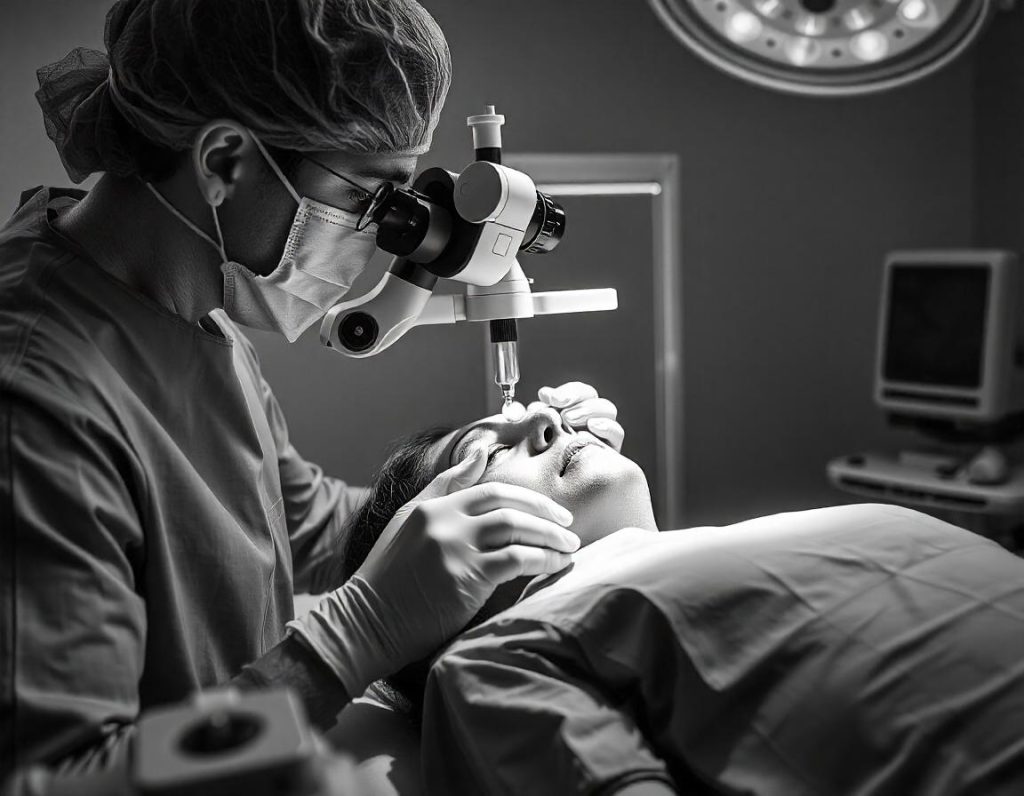
Preparing for cataract surgery is a crucial step in the process. The first step includes a comprehensive consultation with an ophthalmologist, during which thorough vision tests are performed to assess the condition of the eye and to select the right type of lens for the patient. During the tests, parameters such as corneal thickness, the presence of other eye diseases, and the nature of the cloudiness of the natural lens are examined.
Before surgery, tell the doctor about all your medicines, and do not stop any without the doctor's instruction. In addition, makeup or creams should be avoided in the eye area on the day of surgery to reduce the risk of infection. The ophthalmologist will also provide instructions on the use of antibiotic or anti-inflammatory eye drops before surgery, which are designed to prepare the eye and reduce the risk of complications.
As part of the preparation, it is important to discuss with your doctor your expectations for the surgery and the desired results. The patient may choose an advanced lens, such as a multifocal or toric lens, based on their lifestyle and preferences. Advance preparation is also an opportunity to ask questions, understand the surgical process, and reduce any feelings of apprehension. Being well prepared, both physically and mentally, contributes to a better surgical experience.
Rehabilitation and recovery after lens implantation in cataract surgery
The rehabilitation and recovery process after lens implantation in cataract surgery requires strict adherence to medical instructions. In the first few hours after surgery, patients may experience mild discomfort or a feeling of dryness in the eye, and sometimes temporary blurred vision. These sensations are normal and usually disappear.
The doctor will provide instructions for using antibiotic and anti-inflammatory eye drops for several weeks after surgery, in order to prevent infections and reduce inflammation. It is important to follow the instructions for using the drops and avoid direct contact with the eye or rubbing it. Patients will also be instructed to avoid strenuous physical activities, such as heavy lifting or sports, during the first few weeks after surgery.
During the rehabilitation process, it is important to attend regular follow-up examinations with your ophthalmologist. These examinations make it possible to check that the implanted lens is properly seated and that there are no signs of infection or other complications. Full adaptation to the lens may take several weeks.
Finally, rehabilitation combines strict adherence to instructions, medical monitoring, and patience.
Toric lens implants: a solution for patients with astigmatism
Toric lens implants are an advanced and effective solution for patients suffering from astigmatism, a condition in which the cornea or lens of the eye is asymmetrically shaped, causing distortion of visual acuity. Astigmatism affects the ability to see clearly, both at distance and near, and often requires the use of glasses or contact lenses with a specific correction. Toric lens implantation in cataract surgery is designed to correct the problem and may reduce the need for glasses.
Toric lenses differ from regular lenses in that they are specially designed to correct the distortion caused by astigmatism. During cataract surgery, the cloudy lens of the eye is removed and replaced with a toric lens chosen by measurements of the patient’s cornea. This procedure may improve vision, especially in cases where astigmatism has been a major factor in the decline in vision.
Toric lens fitting is done through thorough tests before surgery, according to the individual needs of each patient.

Adaptation according to medical needs
One of the most notable advantages of lens implants in cataract surgery is the ability to choose the lens by measurements of the eye and each patient’s needs.
The choice is based on measurements and data about the structure of the eye, such as the shape of the cornea and the presence of other eye diseases, and also on the patient’s preferences regarding their lifestyle. For example, patients who spend many hours in front of a computer can choose a lens designed for vision at medium distances, while patients whose main activity is focused on far or near distances can choose a more suitable lens.
The fitting is done during the initial diagnostic and consultation process, which uses advanced equipment for eye imaging and corneal mapping. The surgeon uses this data to select a suitable lens for the patient, taking into account their overall health and possible medical problems.
Laser Cataract Surgery: How Does It Work?
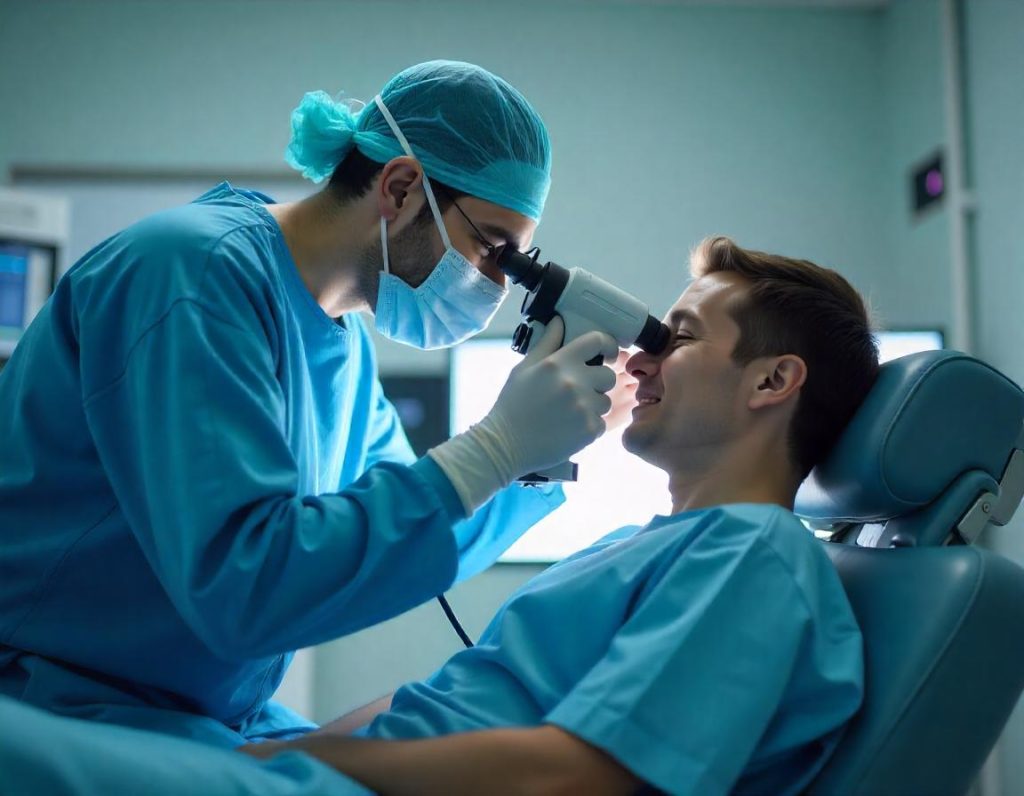
Laser cataract surgery is a technological innovation in cataract surgery. This process combines the use of advanced laser technology with the skill of the surgeon. The laser allows for extremely precise incisions to be made in the cornea and lens capsule.
During the procedure, laser technology creates fine, precise openings in the eye. The laser is then used to break up the cloudy lens into small particles, making it easier to remove using a phacoemulsification procedure. These operations are performed quickly and precisely.
Side effects and risks
As with any surgical procedure, lens implantation carries the potential for side effects and risks. It is important to be aware of the possible consequences and know how to deal with them.
One of the common side effects is temporary discomfort in the eye, including mild irritation, dryness, or a foreign body sensation. These are normal and usually resolve within a few days or weeks with the use of soothing and antibiotic eye drops. Another common side effect is mild blurred vision or flickering, which can occur in the early stages after surgery but gradually improves as the eye adjusts to the new lens.
A more significant, although rare, risk is the development of an intraocular infection (endophthalmitis), a condition that requires immediate medical attention. To prevent infections, eye hygiene should be maintained and antibiotic drops should be used as directed by your doctor. Other rare complications include chronic inflammation or retinal detachment. Clouding of the posterior capsule (secondary cataract) is relatively common and can be treated with a YAG laser.
Another, but very rare, risk is harm to vision due to the implanted lens moving out of place. This condition may require a repeat surgical intervention to correct the position.
Understanding the possible side effects and risks is an important part of preparing for surgery. With professional advice, choosing an experienced surgeon, and careful medical follow-up, you can reduce the risk of complications.
How much does a lens implant cost in cataract surgery?
The cost of cataract surgery lens implantation varies depending on a number of significant factors, including the type of lens chosen, the technology used during the surgery, and the surgeon’s experience. The public health basket covers cataract surgery with a regular lens only, and advanced lens implantation, such as multifocal or toric lenses, incurs additional costs. The health funds' supplementary insurance plans apply only to surgery with a surgeon in the arrangement, according to the plan, and do not give a refund for privately funded surgery.
Multifocal lenses, for example, which are designed for vision at different ranges, may cost more due to their technological complexity and the optical benefit they provide. Toric lenses, designed to correct astigmatism, also require a higher investment. In addition, advanced technologies such as femtosecond lasers in cataract surgery may increase the overall price of the procedure.
Private cataract surgery with a standard lens usually costs 10,000–13,000 NIS per eye. An advanced or toric lens adds about 2,500–5,000 NIS per eye, and the use of a laser adds 2,000–7,000 NIS per eye. It is worth remembering that the location of the surgery – public or private – also has an impact on the cost. In private hospitals, the price will usually be higher, but sometimes includes hospitalization conditions and improved personal service.
Prices are a general estimate only; an exact quote is given after an examination. Get a personal price quote
It is important to consult with an ophthalmologist to understand the most appropriate options medically and financially, and to choose an option that combines cost and long-term benefit.
What are the long-term results of lens implants?
Patients who undergo cataract surgery with lens implantation may experience improvements in visual acuity, daily functioning, and overall quality of life.
In the long term, the implanted lenses remain stable in place and do not wear out. In cases where advanced lenses such as multifocal or toric are chosen, they may reduce the need for glasses or contact lenses.
When a problem such as secondary clouding of the capsule arises, it can be treated using a YAG laser.
Have a question about cataract surgery? We are happy to help.